
How Cloudflare Protects Websites From Modern Cyber Attacks with Advanced DDoS Mitigation Services
By CLOUD FLARE, Cloudflare, Inc.
In an era where cyber threats are increasingly sophisticated, protecting websites from attacks is paramount for businesses of all sizes. This article delves into how Cloudflare, Inc., a leading internet security and performance company, safeguards websites through advanced DDoS mitigation services. Readers will learn about the effectiveness of these services, the features that set them apart, and the implementation strategies that ensure robust protection. As cyber attacks evolve, understanding the mechanisms behind DDoS attacks and how Cloudflare mitigates them is crucial for maintaining online security. This guide will cover the effectiveness of Cloudflare’s solutions, the role of its Web Application Firewall (WAF), and the benefits of its bot management and serverless security features.
Key Takeaways
- Cloudflare protects websites from modern cyber attacks using advanced DDoS mitigation services and a global network.
- Its multi-vector attack defense and adaptive mitigation provide tailored protection against various simultaneous DDoS attacks.
- Cloudflare’s Web Application Firewall filters malicious HTTP traffic and blocks application-layer threats with customizable rules.
- Bot Management uses machine learning to detect and mitigate malicious bots, improving website security and performance.
- Serverless security features protect modern web applications by securing serverless environments and integrating threat intelligence.
- Cloudflare’s extensive global network capacity enables real-time absorption and mitigation of large-scale DDoS attacks.
- Implementation is simplified through easy onboarding, centralized management, and continuous monitoring with real-time analytics.
- Combining DDoS protection, WAF, and bot management creates a layered security approach against evolving cyber threats.
- Performance optimization is achieved by edge security and global caching, enhancing website speed alongside security.
Effectiveness
Cloudflare’s DDoS mitigation services are highly effective due to their massive network capacity and proven track record in real-time threat mitigation. The company operates a globally distributed network that can absorb and mitigate attacks before they reach the target website. This proactive approach ensures that websites remain online and functional, even during significant attack events. The combination of advanced technology and a vast infrastructure allows Cloudflare to provide reliable protection against various types of DDoS attacks.
Features
Cloudflare’s DDoS protection services come with several key features that enhance their effectiveness:
- Multi-Vector Attack Defense: Cloudflare can handle multiple types of attacks simultaneously, ensuring comprehensive protection.
- Adaptive DDoS Mitigation: The system automatically adjusts to the scale and type of attack, providing tailored responses.
- Global Presence: With data centers around the world, Cloudflare can quickly respond to threats, minimizing latency and downtime.
These features make Cloudflare a preferred choice for businesses looking to secure their online presence.
Implementation Strategies
Implementing Cloudflare’s DDoS protection is straightforward, allowing organizations to quickly enhance their security posture. Key strategies include:
- Easy Onboarding: Cloudflare provides a user-friendly setup process that can be completed in minutes.
- Centralized Management: Users can manage their security settings from a single dashboard, simplifying oversight.
- Continuous Monitoring: Cloudflare offers real-time analytics and alerts, enabling businesses to respond swiftly to potential threats.
These strategies ensure that organizations can effectively utilize Cloudflare’s services to protect their websites.
What Are DDoS Attacks and How Does Cloudflare Mitigate Them?

DDoS (Distributed Denial of Service) attacks are malicious attempts to disrupt the normal functioning of a targeted server, service, or network by overwhelming it with a flood of traffic. Cloudflare mitigates these attacks through a combination of traffic filtering, rate limiting, and challenge-response tests that distinguish between legitimate users and malicious traffic. This multi-layered approach ensures that only valid requests reach the server, maintaining service availability.
For a deeper understanding of the techniques and methodologies behind various DDoS attacks and their corresponding mitigation strategies, the following research offers valuable insights.
A Comprehensive Overview of DDoS Attack Types and Mitigation Strategies
Within the evolving landscape of cyber threats, Distributed Denial of Service (DDoS) attacks present a considerable challenge to internet security. This research offers a comprehensive overview of various DDoS attack methodologies and investigates the effectiveness of contemporary mitigation strategies. It categorizes DDoS attacks based on their operational methods and target profiles, emphasizing their distinct characteristics and resultant impacts. The study explores a spectrum of mitigation approaches, ranging from conventional network-based techniques to recent advancements leveraging artificial intelligence, critically evaluating their respective strengths and limitations.
Overview of distributed denial of service (ddos) attack types and mitigation methods, 2024
Understanding Volumetric and Application-Layer DDoS Attacks
DDoS attacks can be categorized into two main types: volumetric and application-layer attacks.
- Volumetric Attacks: These attacks aim to consume the bandwidth of the target, overwhelming it with massive amounts of traffic. They often involve botnets that generate high traffic volumes.
- Application-Layer Attacks: These are more sophisticated and target specific applications or services, exploiting vulnerabilities to disrupt functionality.
Understanding these attack types is crucial for implementing effective mitigation strategies.
Cloudflare’s Global Network Capacity for Real-Time DDoS Protection
Cloudflare’s extensive global network capacity is a cornerstone of its DDoS protection strategy. With data centers strategically located worldwide, Cloudflare can absorb and mitigate attacks in real-time, ensuring minimal impact on website performance. This global reach allows for rapid response times and effective traffic management, making it a leader in the cybersecurity space.
How Does Cloudflare’s Web Application Firewall Enhance Website Security?
Cloudflare’s Web Application Firewall (WAF) plays a critical role in enhancing website security by filtering and monitoring HTTP traffic between a web application and the Internet. The WAF protects against common threats such as SQL injection, cross-site scripting (XSS), and other vulnerabilities.
In practice, integrating Cloudflare with robust WAF solutions has been shown to effectively mitigate advanced cyber threats.
Leveraging Cloudflare and Web Application Firewalls for Distributed Denial-of-Service Attack Mitigation
Upon deployment and integration with Cloudflare, integrity verification processes were successfully executed prior to resource loading, thereby demonstrating comprehensive mitigation of the attacks.
Detecting and preventing of DDoS attack in cloud computing environment based on hybrid technique (CloudFlare and WAF), G Akawuku, 2023
Customizable WAF Rules to Block Application Layer Threats
One of the standout features of Cloudflare’s WAF is its customizable rules. Users can create specific rules tailored to their applications, allowing for targeted protection against application-layer threats. This flexibility ensures that businesses can adapt their security measures to evolving threats.
Integration of Threat Intelligence in WAF Solutions
Cloudflare’s WAF solutions are enhanced by integrating threat intelligence, which provides real-time data on emerging threats. This proactive approach allows the WAF to adapt and respond to new vulnerabilities, ensuring ongoing protection for web applications.
What Role Does Cloudflare Bot Management Play in Preventing Malicious Traffic?
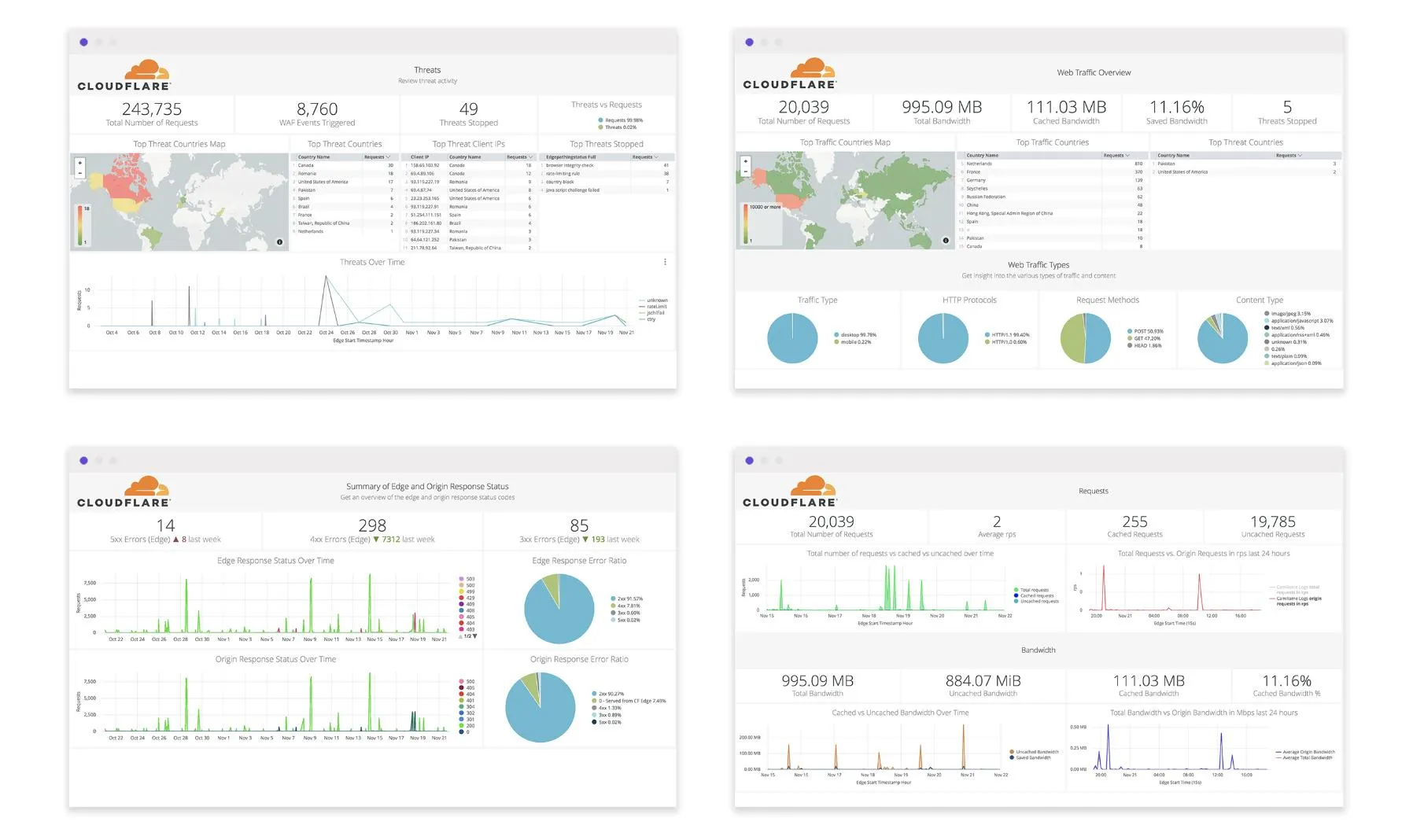
Cloudflare’s Bot Management is essential for preventing malicious traffic that can compromise website security. By employing machine learning techniques, Cloudflare can detect and mitigate malicious bots effectively.
Machine Learning Techniques to Detect and Mitigate Malicious Bots
Cloudflare utilizes advanced machine learning algorithms to analyze traffic patterns and identify potential threats. This real-time detection capability allows for swift action against malicious bots, ensuring that legitimate users are not affected.
Benefits of Automated Bot Management for Website Performance
Automated bot management not only enhances security but also improves website performance. By filtering out harmful traffic, Cloudflare ensures that resources are allocated to genuine users, resulting in faster load times and a better user experience.
How Do Cloudflare’s Serverless Security Features Protect Modern Web Applications?
Cloudflare’s serverless security features are designed to protect modern web applications from emerging threats. These features include DDoS protection, API security, and threat intelligence integration.
Securing Serverless Computing Environments Against Emerging Threats
As businesses increasingly adopt serverless architectures, securing these environments becomes critical. Cloudflare provides tools and strategies to protect serverless applications from vulnerabilities and attacks, ensuring robust security.
Developer Tools for Integrating Security in Serverless Architectures
Cloudflare offers a range of developer tools that facilitate the integration of security measures into serverless architectures. These tools help developers implement best practices for security, ensuring that applications remain protected throughout their lifecycle.
What Are the Key Benefits of Using Cloudflare as an Internet Security Platform?
Using Cloudflare as an internet security platform offers several key benefits:
- Massive Network Capacity: Cloudflare’s extensive infrastructure can handle large volumes of traffic, ensuring reliable service.
- Multi-Vector Attack Defense: The platform is equipped to defend against various types of attacks simultaneously.
- 24/7 Support: Cloudflare provides round-the-clock support to assist businesses in managing their security needs.
These benefits make Cloudflare an attractive option for organizations seeking comprehensive internet security solutions.
Comprehensive Protection Combining DDoS, WAF, and Bot Management
Cloudflare’s approach to security combines DDoS protection, WAF, and bot management into a unified platform. This layered security strategy ensures that businesses are protected from a wide range of threats, providing peace of mind in an increasingly dangerous digital landscape.
Performance Optimization Through Edge Security and Global Network
In addition to security, Cloudflare’s global network enhances website performance through edge security measures. By caching content closer to users and optimizing traffic routes, Cloudflare ensures fast load times and a seamless user experience.
How Can Businesses Monitor and Optimize Their Cloudflare Security Implementations?
Monitoring and optimizing security implementations is crucial for maintaining effective protection. Cloudflare provides tools and analytics that allow businesses to track their security performance and make necessary adjustments.
Using Structured Data and Analytics for Security Performance Tracking
Businesses can leverage structured data and analytics to gain insights into their security performance. By analyzing traffic patterns and threat data, organizations can identify areas for improvement and optimize their security measures.
Updating Security Measures Based on Latest Threat Intelligence and Case Studies
Regularly updating security measures based on the latest threat intelligence is essential for staying ahead of cyber threats. Cloudflare encourages businesses to utilize analytics tools and case studies to inform their security strategies, ensuring they remain effective against evolving threats.
Frequently Asked Questions
What types of businesses can benefit from Cloudflare’s DDoS mitigation services?
Cloudflare’s DDoS mitigation services are beneficial for a wide range of businesses, from small startups to large enterprises. Any organization that relies on an online presence, including e-commerce sites, financial institutions, and content delivery networks, can leverage these services to protect against cyber threats. The scalability of Cloudflare’s solutions allows businesses of all sizes to implement robust security measures tailored to their specific needs, ensuring that they remain operational even during significant attack events.
How does Cloudflare’s adaptive DDoS mitigation work in real-time?
Cloudflare’s adaptive DDoS mitigation employs advanced algorithms that analyze incoming traffic patterns in real-time. When an attack is detected, the system automatically adjusts its defenses based on the type and scale of the threat. This dynamic response ensures that legitimate traffic is prioritized while malicious requests are filtered out, maintaining website availability and performance. The ability to adapt quickly to changing attack vectors is a key feature that sets Cloudflare apart in the cybersecurity landscape.
Can Cloudflare’s services help improve website performance in addition to security?
Yes, Cloudflare’s services are designed to enhance website performance alongside security. By utilizing edge caching and optimizing traffic routes, Cloudflare reduces latency and speeds up content delivery. This means that users experience faster load times, which can lead to improved user engagement and satisfaction. The combination of security features and performance optimization makes Cloudflare a comprehensive solution for businesses looking to enhance their online presence.
What is the role of threat intelligence in Cloudflare’s security solutions?
Threat intelligence plays a crucial role in Cloudflare’s security solutions by providing real-time data on emerging threats and vulnerabilities. This information allows Cloudflare’s systems to proactively adapt and respond to new attack vectors, ensuring that security measures remain effective. By integrating threat intelligence into its Web Application Firewall (WAF) and other services, Cloudflare enhances its ability to protect web applications from sophisticated cyber threats, keeping businesses secure in a constantly evolving digital landscape.
How does Cloudflare support businesses in managing their security settings?
Cloudflare offers a centralized management dashboard that simplifies the oversight of security settings for businesses. This user-friendly interface allows organizations to easily configure their security measures, monitor traffic, and receive real-time alerts about potential threats. Additionally, Cloudflare provides 24/7 support to assist businesses in managing their security needs, ensuring that they can respond swiftly to any issues that may arise. This comprehensive support structure helps businesses maintain a strong security posture.
What are the advantages of using Cloudflare’s Web Application Firewall (WAF)?
Cloudflare’s Web Application Firewall (WAF) offers several advantages, including customizable rules that allow businesses to tailor their security measures to specific threats. The WAF effectively filters and monitors HTTP traffic, protecting against common vulnerabilities such as SQL injection and cross-site scripting. By integrating threat intelligence, the WAF can adapt to new threats in real-time, ensuring ongoing protection. This proactive approach, combined with ease of management, makes Cloudflare’s WAF a valuable asset for enhancing website security.
Conclusion
Cloudflare’s advanced DDoS mitigation services provide businesses with robust protection against a wide array of cyber threats, ensuring their online presence remains secure and operational. By leveraging a global network, adaptive defenses, and a comprehensive suite of security features, organizations can enhance both their security posture and website performance. Understanding and implementing these solutions is crucial for maintaining resilience in today’s digital landscape. Discover how Cloudflare can safeguard your business by exploring our services today.